Singapore needs microforests to scale big
Urban forests offer cooling relief, but without scaling up their impact will be negligible as secondary forests are chopped for public housing.

Good idea – if it can scale.
If it doesn’t, it feels like greenwashing.
Singapore is rapidly losing forests to development, and real estate firm City Developments Limited (CDL) is aiming to plant a network of ‘microforests’ to mitigate urban heat and boost local biodiversity.
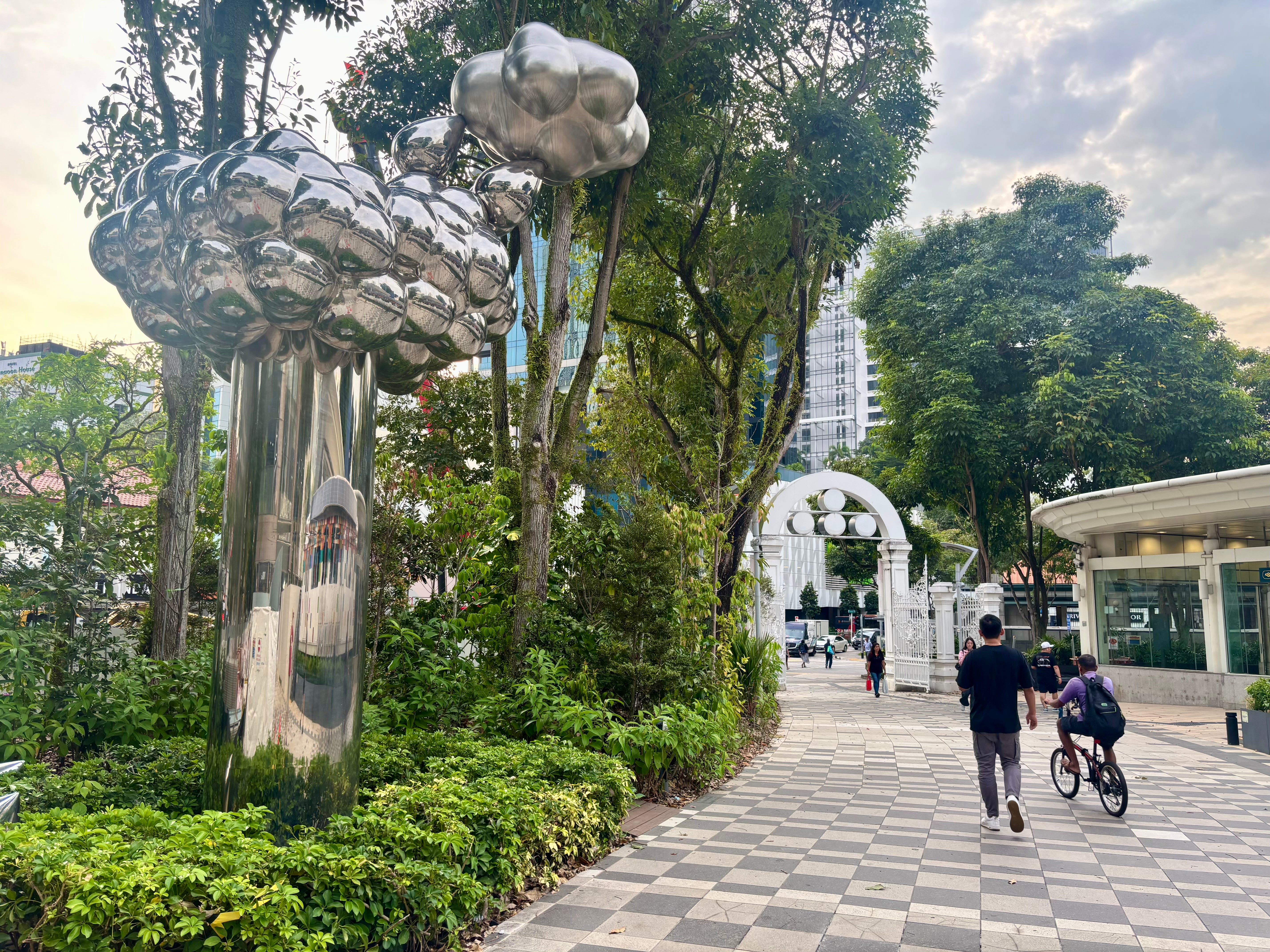
Two basketball court-sized forests have been planted by a shopping mall in heavily-urbanised Little India – with two more in the pipeline over the next few years.
The brainchild of Japanese ecologist Akira Miyawaki, a microforest is a small, densely planted area of native vegetation designed to grow fast.
While Singapore has a national reforestation programme, ‘One Million Trees’, CDL’s chief sustainability officer Esther An has observed that these trees are being planted in remote areas where there is already greenery.
The idea for microforests, she says, is to plant them in downtown and residential areas where the urban heat island effect is most acute.
The question, though, is whether enough of them can be planted as Singapore struggles with rising heat and flood risk.
Singapore recently outlined a climate adaptation plan to buffer against extreme heat, flash floods and rising seas.
But at the same time, secondary forests are being cut down for public housing at an alarming rate – and residents are making the connection between forest loss and unbearable temperatures.
An area of forest the size of Singapore’s nature reserves and parks combined could be lost to development over the next decade, according to the city’s urban masterplan.
These forests could be critical in keeping Singapore cool as temperatures rise – but no studies have been done on the impact of forest loss on local temperatures.
CDL’s microforests are tiny. While studies by National University of Singapore have shown they have some cooling effect on their immediate surroundings, unless they can scale, their impact will be negligible.
Other companies and government agencies will need to plant their own – or refrain from cutting down the forest that still stands on their premises.
Officials are fond of claiming that Singapore is 40% covered by greenery, and is one of the world’s greenest cities – but only a chunk of its greenery is forest.
The city should also look to “de-ornamentalise” its greening efforts, opting for more native species that are more resilient to heat and cheaper to maintain, argues Professor Veera Sekaran, who led the planting of CDL’s microforest.
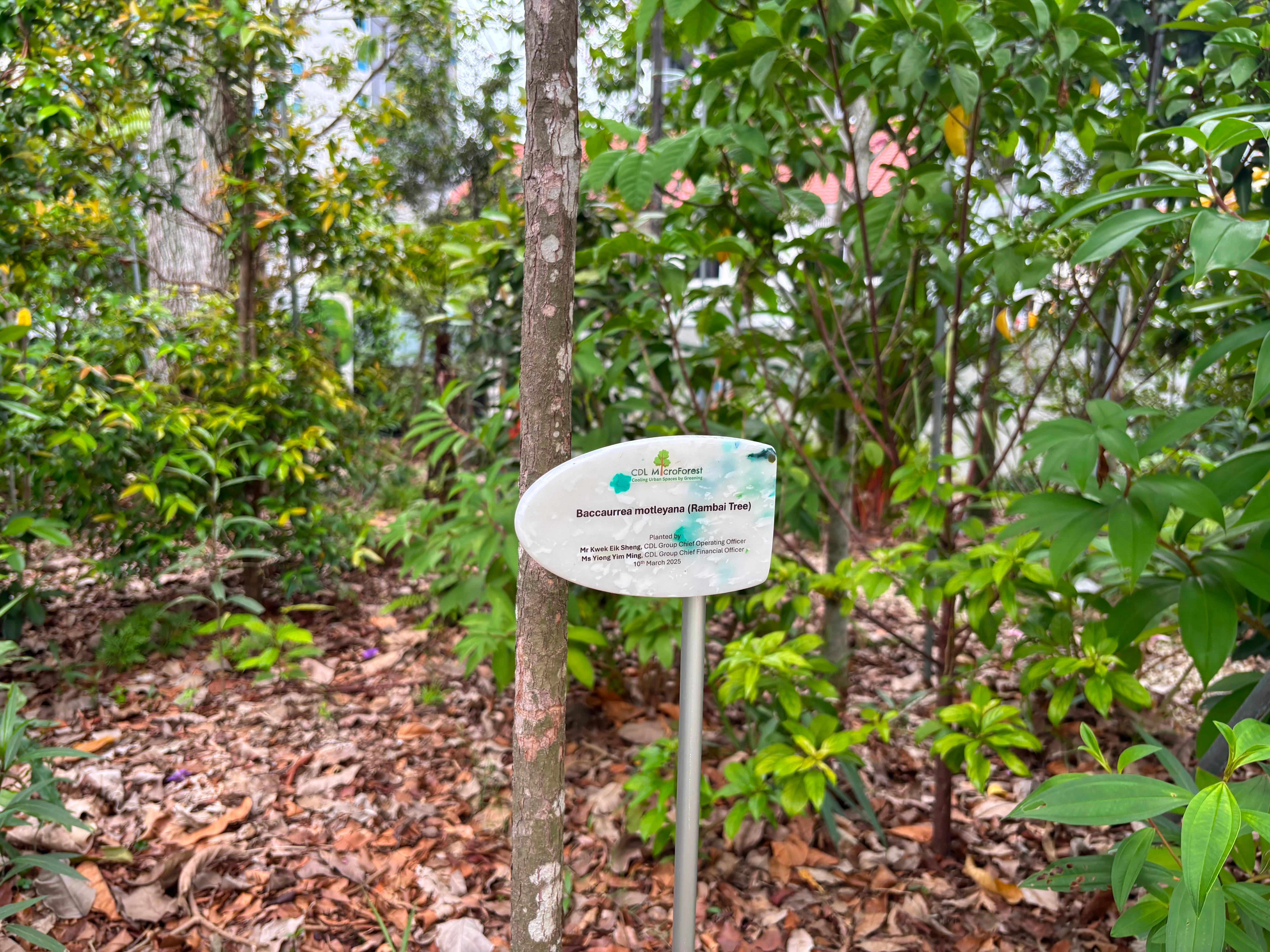
Singapore relies heavily on imported ornamental plants to green its buildings and public spaces, but should invest more in indigenous species that are better adapted to extreme heat, disease and pests while supporting richer biodiversity, argues Sekaran.
This would require a rethink of the Building and Construction authority’s Green Mark certification scheme, to better incentivise planting native species and cultivating wilder areas, Sekaran says.
But introducing more native-based green spaces would require a “mindset shift” among residents – one that began during Covid, when large areas of the city’s green spaces were left to grow wild.
Though Singapore has ambitions to be a “city in nature”, many residents are not ready to accept that with wilder areas come critters.
Culturally, Singapore is a biophobic city.
Building owners are often reluctant to adopt more naturalistic planting, fearing it will attract wildlife in a city that is not always comfortable with close proximity to nature.
Supply chain constraints are another hurdle. Native species are difficult to source from local nurseries, a concern echoed by Dr Stephan Gale, head of flora conservation at Kadoorie Farm and Botanic Garden in Hong Kong, on a podcast last year.
But Singapore will need to pivot from its manicured ‘garden city’ approach to greening, and find the courage to walk on the wild side as the tropical city-state gets hotter and sweatier.